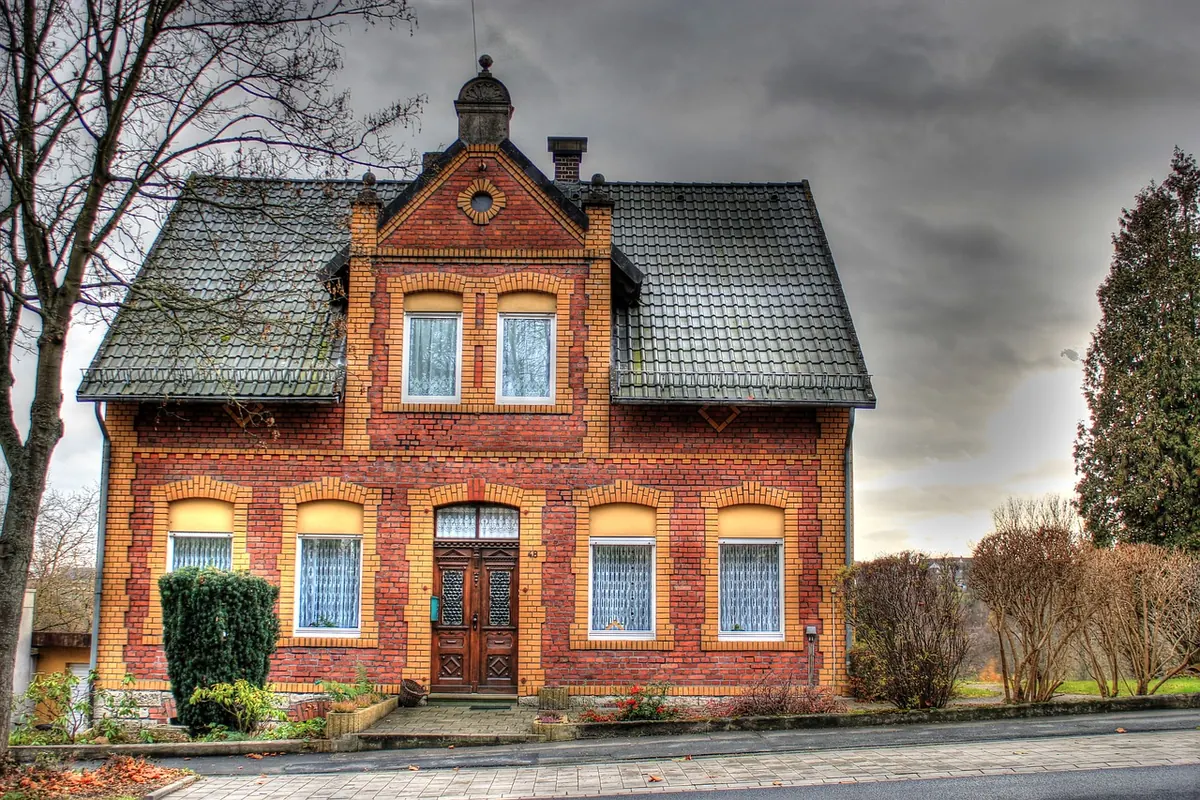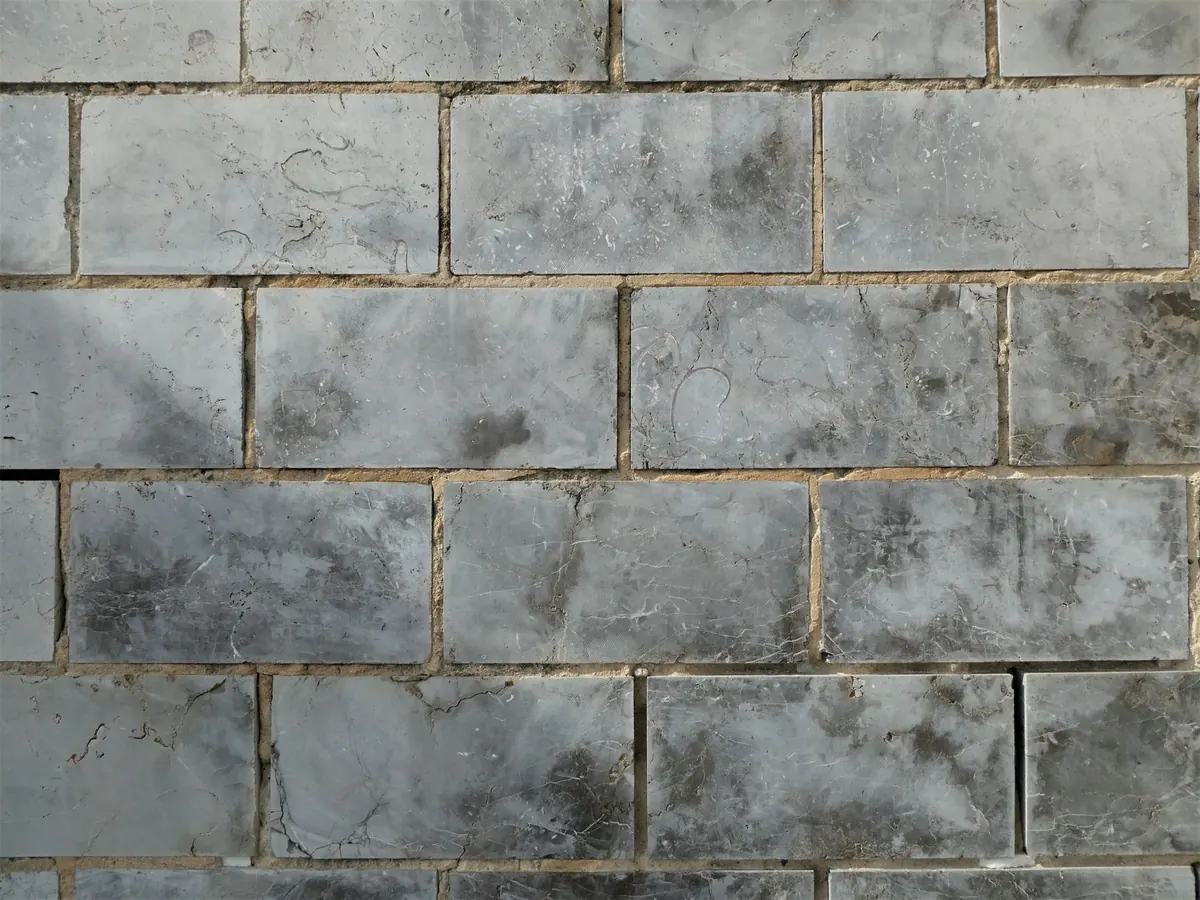

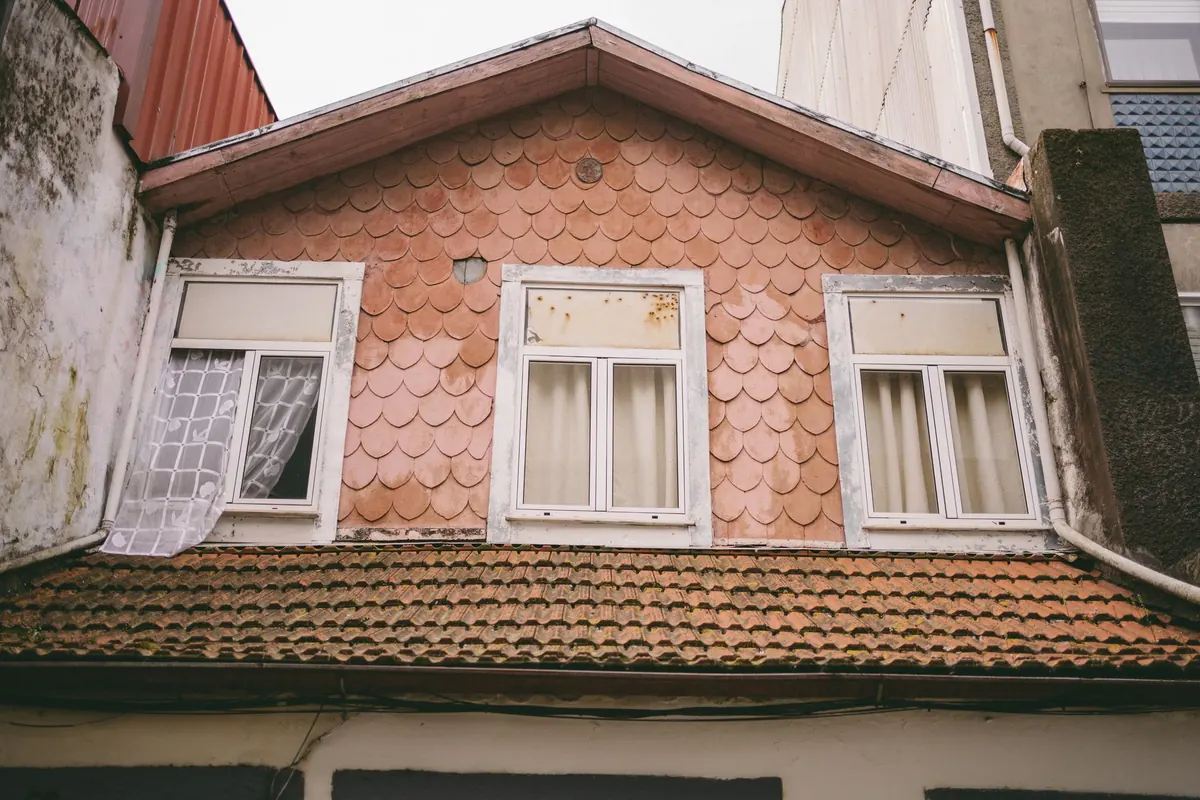
Stand on any street of Georgian or Victorian houses and the roofs tell you which decade you are in before the doorways do. Welsh blue-grey in tight, even courses. Sea-green Westmorland stone slate over a Lake District cottage. A band of purple diamonds across an 1890s villa. Slate colour and texture is the quiet part of a period house's character, and it is the part most often lost when a roof is replaced — usually because the choice was made from a catalogue rather than from the street.
Why period roofs read the way they do
Slate is heavy and awkward to move, so for most of British building history a roof was covered with whatever the nearest quarry could supply. That is why regional palettes exist: blue-grey and heather-purple from north Wales, green stone slate from the Lake District, silver-grey from Cornwall and Devon, dark blue-grey with occasional rust-coloured flecks from Scotland. When canals and then railways made transport cheap, Welsh slate travelled everywhere and became the default for town houses across the country.
Weathering does the rest. New slate arrives dark, sharp-edged and almost uniform. Within a few years it lightens, softens and starts to pick up lichen, and a roof that looked too tidy on completion settles into its surroundings. This matters when you are choosing: the roof you sign off on day one is not the roof you will live with.
Before you choose anything, photograph the best surviving roof on your street. A church, a big house at the end of the terrace, a barn that has never been touched. That is your reference, not a showroom board.
Georgian: order and restraint
Georgian roofs are about repetition. Uniform slate sizes, regular horizontal courses, a single dominant colour, plain stone or simple clay ridges, restrained hips. Where decoration appears it is subtle, and the whole plane reads as one tone from street level. Pitches are often shallower than Victorian ones, which means wider slates and generous headlap, and a flatter, calmer roof plane as a result.
If you are re-slating a Georgian house, resist the temptation to add interest. A single stray band of contrasting slate, a mix of thicknesses, or a scattering of overly purple slates will look restless against a facade built on symmetry. Spend the money on getting the coursing even instead.
Victorian: pattern and confidence
Victorian roofs enjoy a bit of theatre, but disciplined theatre. The patterns were deliberate and often repeated across a terrace, so they were rarely one-off flourishes. Common devices include:
- contrasting bands one or two courses deep, often aligned with a string course or window head
- diamond or lozenge patterns, usually pale slates set into a darker field
- fish-scale and scalloped slates, almost always confined to bays, dormers and turrets
- diminishing courses, running from larger slates at the eaves to smaller ones at the ridge
- decorative ridge tiles, finials and cresting, which do more for the silhouette than most people expect
The rule that keeps these roofs believable is simple: pattern only where it was patterned. If the original had a band above the first-floor windows, reinstate it there. If it did not, adding one now is a twentieth-century idea dressed up as a nineteenth-century one.
Cottages: small, thick and undulating
Vernacular cottages were roofed with what was underfoot: thick limestone or sandstone slates in the Cotswolds and Sussex, small random-width slates elsewhere, heavy green stone slate in Cumbria. These roofs are visually heavy and physically heavy. Courses wander slightly, the roofline sags, and the eaves cast a deep shadow because the slates are genuinely thick.
Putting thin, perfectly flat imported slate on a cottage is the fastest way to make an old building look like a new one with a stone frontage stuck on. If thickness and width variation are what give the roof its age, buy those qualities deliberately. Reclaimed stone slate is finite and priced accordingly, so budget for it before you commit, and expect to blend new matching material through the old.
Colour, size and finish: what to compare
Colour
- Welsh blue-grey and heather blue — the safe default for Georgian and Victorian town houses; cool, with a faint purple cast in some lights.
- Westmorland green — soft green that weathers towards silver-green; the natural choice across much of the north-west.
- Cornish and Devon slate — pale silver-grey, occasionally with a slight sheen.
- Scottish slate — dark blue-grey, often with small rust-coloured pyrite spots that weather out over time.
- Imported slate — Spanish, Canadian, Brazilian and Chinese sources vary widely; many hold a darker, more uniform tone rather than weathering pale.
Never judge a slate indoors. Take samples outside, hold them against the wall and against the sky, and look at them wet as well as dry. Slate changes colour dramatically in rain, and in Britain you will see it wet more often than not.
Size and coursing
The same slate in three different sizes reads as three different roofs. Georgian work wants consistency and even coursing; Victorian work can carry diminishing courses and larger slates on steeper pitches; cottage work wants small, thick, slightly irregular slates. Shallower pitches need more headlap, so the slates themselves become proportionally wider.
Finish
Riven slate, split along the natural cleavage, is the traditional finish and looks right almost everywhere. Sawn, sanded or bevelled slates give a smoother, more regular surface that suits formal Georgian elevations. Rustic or heavy finishes, with a visible undulation, belong on vernacular buildings. What matters is consistency: a rustic edge on a townhouse roof looks careless, and a glassy sawn slate on a cottage looks imported from another century.
Making the choice: a practical sequence
- Check consent first. If the building is listed, or sits in a conservation area, approval may be needed before anything is ordered. Do this before you fall in love with a particular slate.
- Survey what is there. Look at the backs of the existing slates for quarry marks or nail holes, and note the sizes, thicknesses and coursing pattern.
- Read the streetscape. In a terrace, your roof is part of a long, shared plane. Matching the neighbours usually beats out-designing them.
- Order physical samples, not photographs, and live with them for a week before deciding.
- Specify the details at the same time. Ridge, hips, valleys, flashings, rainwater goods and fixings should all suit the period. Copper and stainless fixings behave differently over decades, so agree them in writing.
- Blend on site. Ask the roofer to mix slates from several pallets as they lay, so natural colour variation spreads across the roof instead of appearing in blotches.
Before you order
Put the specification in writing: slate source and colour, size, thickness, headlap, coursing pattern, fixings and the details at ridges and valleys. Ask the supplier how the slate is graded and what service life you should reasonably expect — slate is covered by a product standard, and a good merchant will talk you through the grades without hiding behind it. Then accept that the finished roof will look a little too crisp for two or three years.
On a listed building or in a conservation area, take advice from the local conservation officer early and, if the work is significant, from a surveyor or roofing specialist who works with historic fabric. Consent decisions are easier to live with when they are made before the scaffolding goes up rather than after.
Photo: Diogo Miranda / Pexels